
Omega-3 types
Phospholipids, triglycerides and ethyl ester
Omega-3 comes in several different forms, and it’s not just the amount that matters – how the fatty acids are “packaged” also plays a role. Different omega-3 forms affect both absorption, tolerance, and how the body uses them. Here’s a simple explanation of the three most common forms of omega-3, and what characterizes them:

1. Omega-3 as phospholipids – nature’s own form
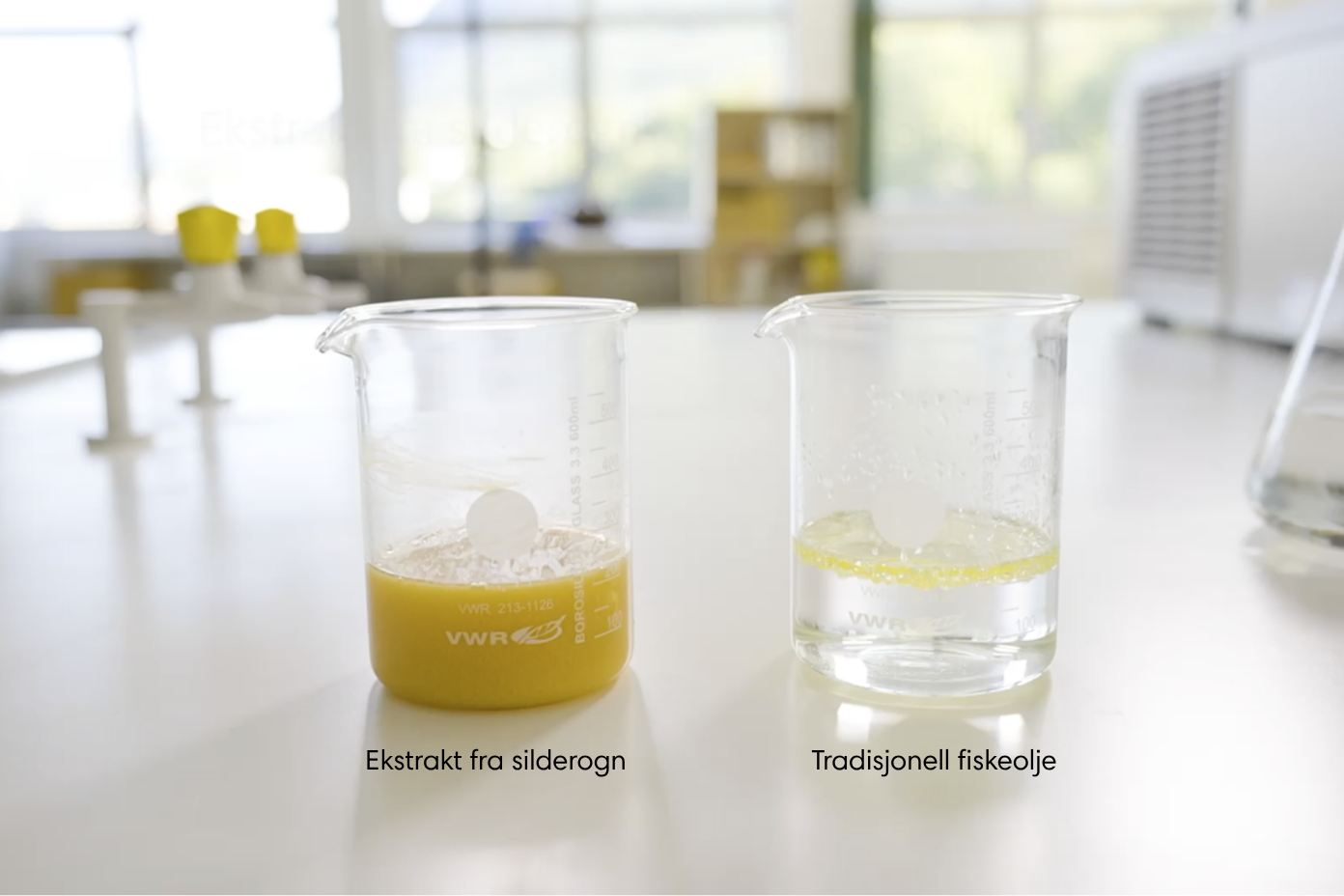
Romega capsules contain an all-natural oil emulsion that can be mixed with water, unlike many other oils.
Phospholipids are the form of omega-3 that naturally occurs in the body's cell membranes, including the brain, eyes, and all cells in the body. This form is found naturally in herring roe, krill, and cell membranes, among other things.
Characteristics : Omega-3 is bound to a phospholipid, a structure that likes both fat and water. This means that phospholipid-bound omega-3 mixes very well in the body's fluids and provides efficient absorption into cells. Phospholipid-bound omega-3 has shown better absorption than both triglycerides and ethyl ester in several clinical studies (1)
Advantages:
- Fast and effective absorption into the body.
- No fish regurgitation, because it dissolves better in stomach fluid. (2)
- Naturally compatible with the body's own membranes, especially in the brain and eyes.
- May benefit cell function and cell communication.(3)
2. Omega - 3 as triglycerides – the classic form of fat
Triglycerides are the most common form of fat in the diet, and are also the form omega-3 occurs in traditional fish oils, plant oils, etc.
This is a natural form of fat, but can be both natural or reconstituted for use in dietary supplements.
Advantages :
- Less rapidly absorbed than phospholipid-bound omega-3. Absorption is improved when taken with a meal containing fat.
- A natural form that the body is used to digesting and utilizing.
- Often used in fish oil supplements.
Disadvantages
- Causes fishy regurgitation, because triglycerides mix less effectively in gastric fluid.
- Slightly later absorption than phospholipid-bound omega-3s, which have documented faster incorporation. (5)
- Picture of fish oil that does not mix with water, for example.
3. Omega - 3 as ethyl ester – the most processed form
This is a more chemically processed form of omega-3 that is often used in concentrated fish oils. The fatty acids are attached to an ethanol molecule, not a natural fat molecule.
Characteristics: The chemical process makes it possible to produce omega-3 with very high EPA/DHA content, but the ethyl ester must be converted back to a natural form before the body can absorb it. (6)
Advantages :
- May contain high doses of omega-3 per capsule.
- Cheaper to produce.
Disadvantages :
- Most processed
So what should you choose?
Omega-3 does not come in one standard form. Phospholipids, triglycerides and ethyl esters are structured differently, which affects both absorption, tolerance and how the body uses the fatty acids.
- Best absorption and most gentle on the stomach : Phospholipid-bound omega-3.
- Safe and traditional: Triglycerides
- High potency but lower absorption: Ethyl ester (Most processed and poorest bioavailability. (7)

Sources:
2 Cook et al. (2016) Bioavailability of long chain omega-3 polyunsaturated fatty acids from phospholipid-rich herring beet oil in men and women with mildly elevated triacylglycerols – PubMed
Subscribe to our newsletter
Get promotional offers, follow all the news and get updates on what's happening with Romega.
Stories

My skin regained its glow with Skin Refine
My skin regained its glow with Skin Refine

A different omega-3 experience
Traditional omega-3 isn’t for everyone. For me, choosing a phospholipid-based variety that feels easier for the body to absorb made a difference.

Quality in every aspect
“Romega® is not just a daily supplement, but an investment in health, energy and sustainable performance.”